Marianne Kavanagh from Pink Moon ceremonies brings you The Real Fairy Tale wedding ceremony!
As a storyteller and Celebrant I am in a unique position to offer you a ceremony which blends fairytale and myth into the ceremony itself. Taking inspiration from the old tales from our oral tradition along with the Pagan customs, which are inseparable from our ancestral myths, I will help you to create a ceremony imbued with meaning incorporating elements from story which speak to you personally.
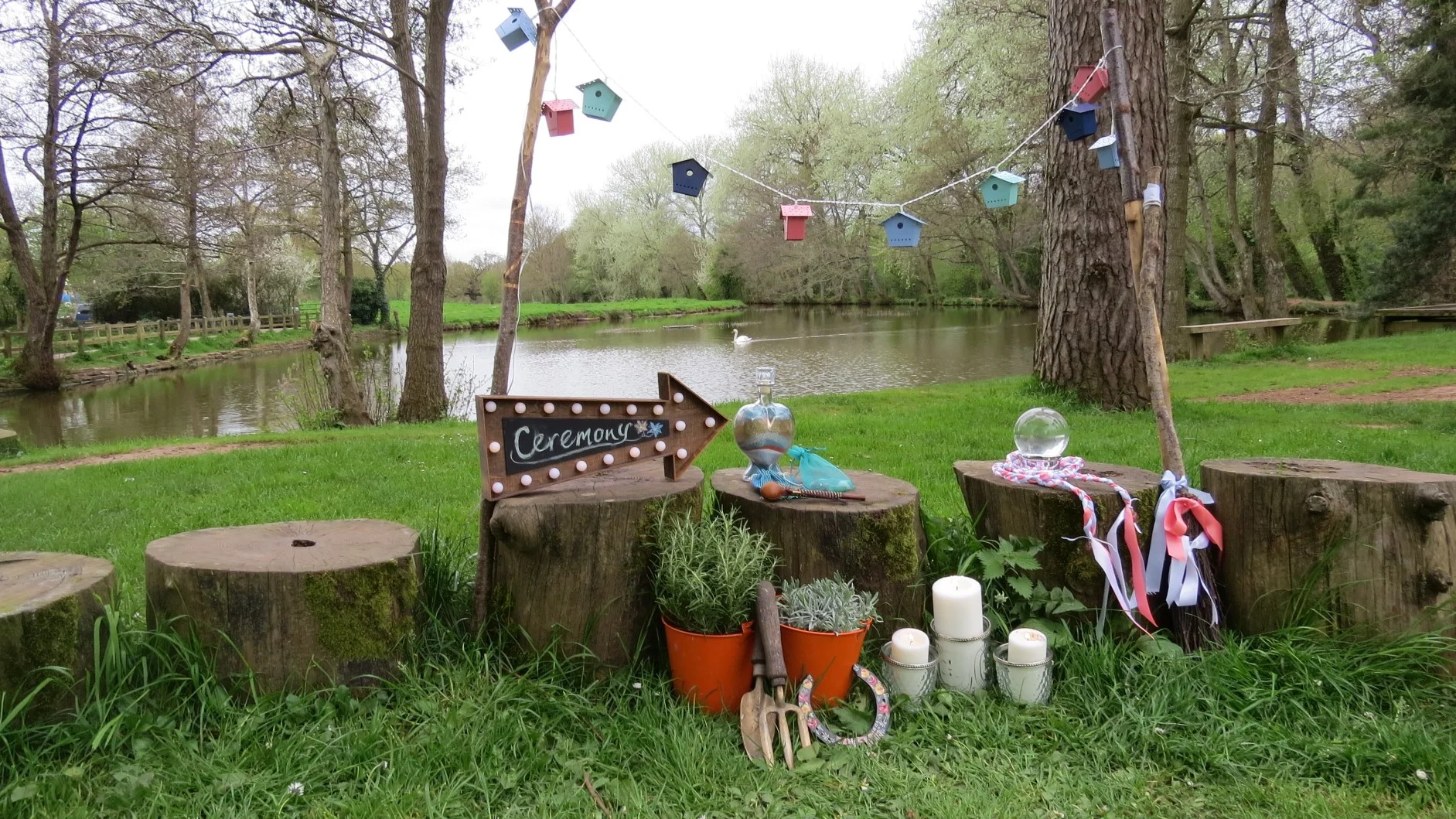
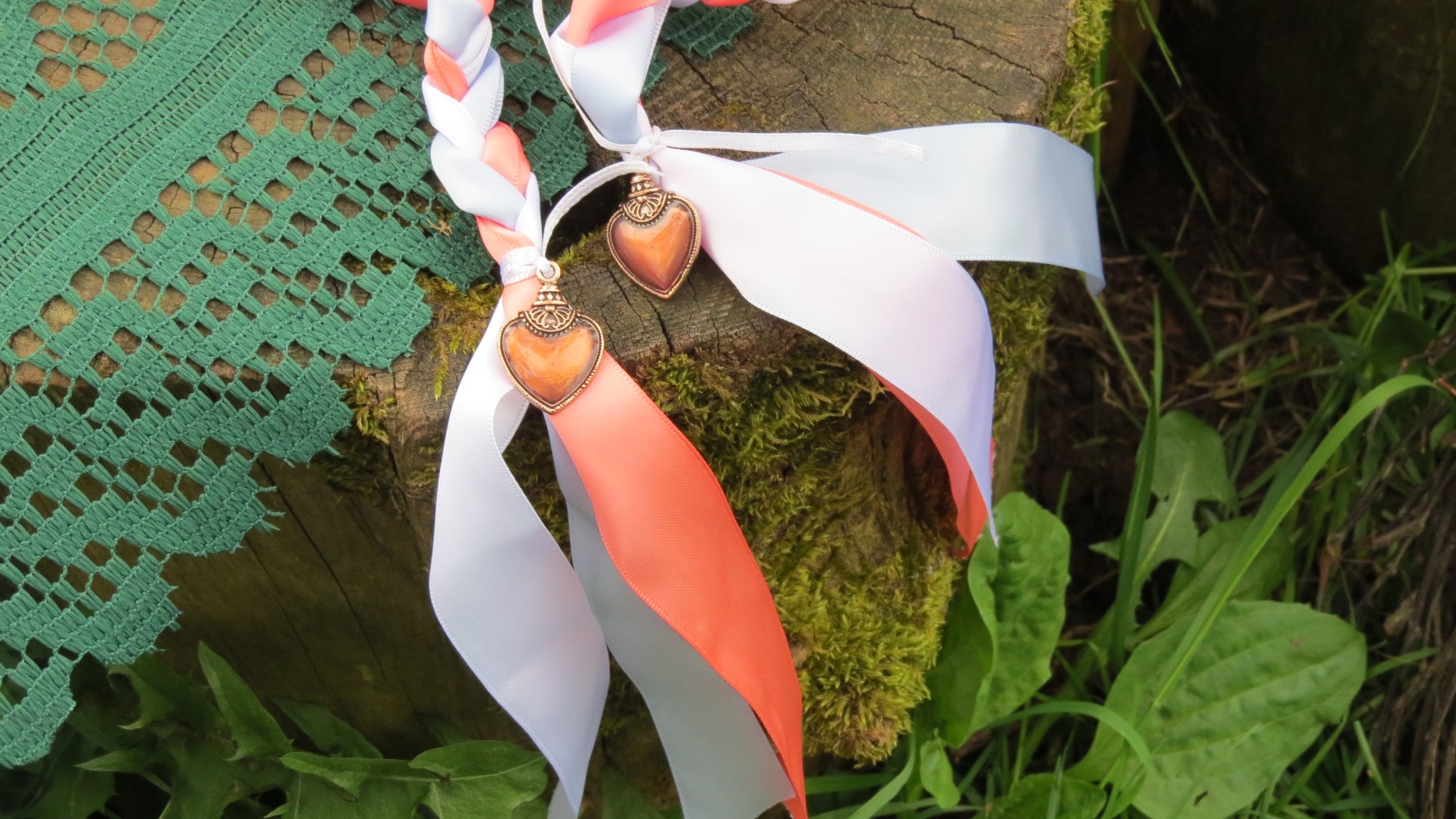
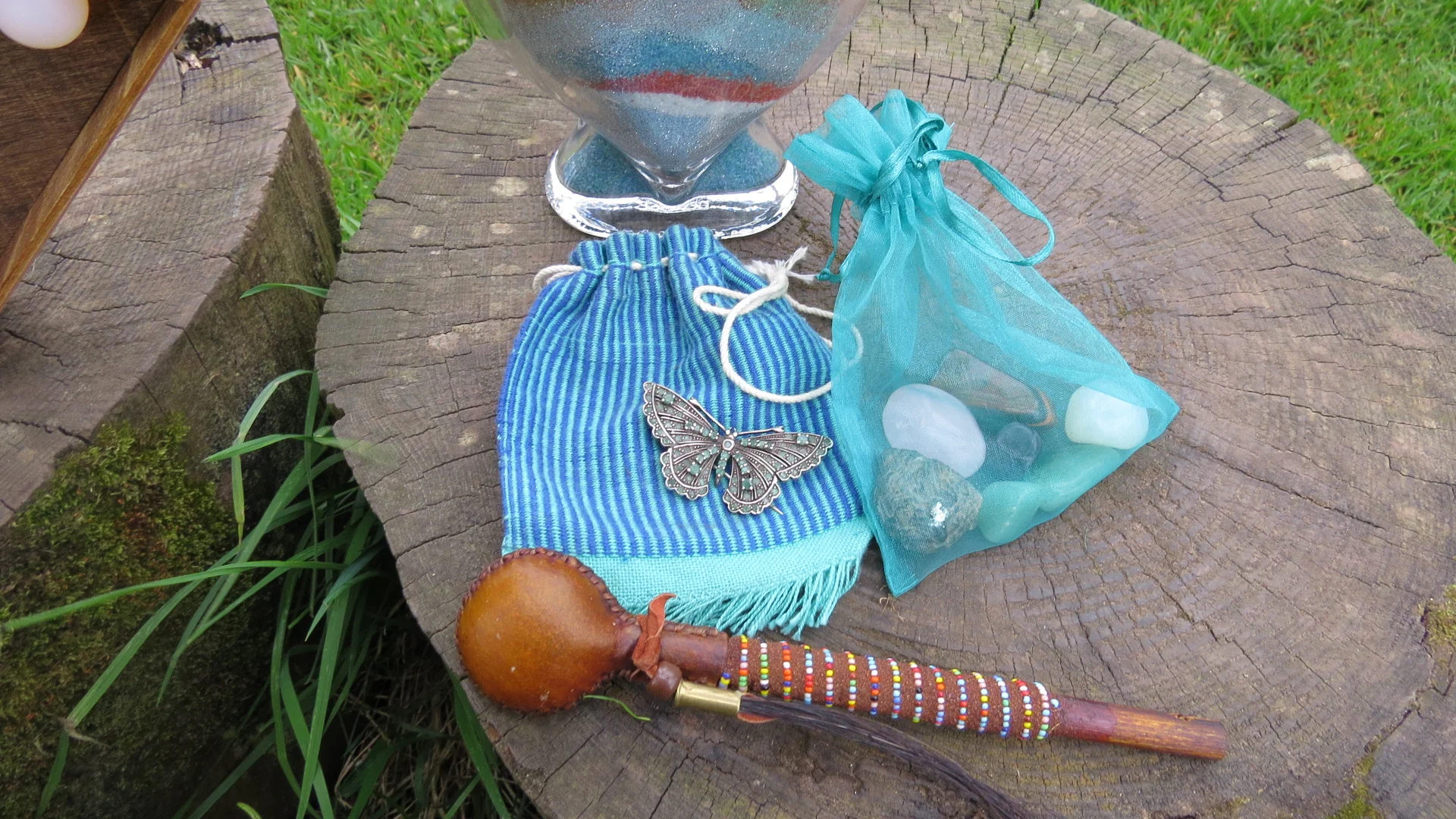
Pictured below are elements included in a Real Fairy Tale ceremony. The chosen colours represent the elements; blue for the sky and sea, terracotta and green for the earth, white for the air and orange and gold for fire. Each element is carefully woven into the ceremony and your story as a couple.
You can choose from a range of elements to make your fairytale wedding come true; a hand-fasting, you and your beloved can jump the broom, pour sand to create your own unity sand bottle to keep and display, or participate in a 4 elements ceremony...
Here's a bit more information about each of the ceremony elements.
Handfasting Ceremony
A handfasting is an old Pagan custom, dating back to the time of the ancient Celts. A handfasting was originally more like an engagement period, where two people would declare a binding union between themselves for a year and a day. The original handfasting was a trial marriage. It gave the couple the chance to see if they could survive marriage to each other. After a year goes by, the couple were either free to go their separate ways as if they had never been married or could decide to enter permanently into marriage.
There are many variations of the traditional handfasting. After the bride and groom both declare their intent to enter into this union, the hands of the couple are clasped and fastened together with a cord or cords just before, just after, or during their vows are made to one another. The wrapping of the cord forms an infinity symbol. The handfasting knot that is tied is a symbolic representation of oneness between the couple. In a show of unity, they become bound to each other.
Unity Candle Ceremony
Although the origins of a candle being lit by the couple at weddings are unknown and it seems to have become popular in recent years, people have been lighting candles in order create an intention in ceremonies for hundreds of years. This creates an opportunity for Mums to become involved as it's usually the bride and grooms mothers who light the candle from which the bride and groom take a light for their own candle.
Warmth and light from the sun are the foundations of life. Fire holds a special place in fairytales and in our consciousness. This is why the lighting of candles can be a powerful ritual. We all have our own relationship with the element of fire and we all feel a sense of reverence in its presence.
Unity Sand Ceremony
The roots of this ceremony are contentious. Whether it's derived from a Hawaiian custom of mixing the sand and seashells beneath the couple's feet, the Native American tradition of sand painting, or from the Jewish tradition of using salt to cement an agreement, this element gives you the opportunity to open the ceremony up to others, to make your ceremony feel both inclusive and intimate.
It's a great way to involve children in blended families and you can choose colours according to Jung's colour theory or pick colours that have particular significance to each of you involved.
Jung's colour theory
COOL BLUE: showing no bias, objective, detached, analytical
EARTH GREEN: still, tranquil, calming, soothing
SUNSHINE YELLOW: cheerful, uplifting, spirited, enthusiastic
FIERY RED: positive, decisive, bold, assertive
Four Elements Ceremony
Invoking the four directions and the elements associated with these directions, gemstones, herbs and other natural matter will be selected to symbolize your values, hopes and dreams for your marriage and journey in life together and packaged into a ceremonial bag. There will be an opportunity for each of your guests to hold the ceremonial bag and send good wishes to you as a couple. The elements of the bag will all be returned to the earth after the ceremony, as a symbolic act of taking nothing and leaving nothing but love.
Broom Jumping Ceremony
Again the roots of this custom are contentious. The custom of jumping the besom broom seems to come to us from Wales, primarily, but there is some contention as to whether it comes from Romani Gypsy people living in Wales or come from the Welsh people themselves.
The earliest mention seems to come from the early 18th century though Romani have been in Wales since at least the 16th century. Regardless of origin, jumping the broom has been embraced by the Welsh as a sort of common-law marriage symbolic act. The symbolic role of the broom or besom in the home is rich and varied in Celtic culture.
Perhaps its greatest role is that of setting the boundary between the home and the wild. The act of sweeping the floor was not only a way of cleaning, but also demarcated the boundaries of the home. In ancient times, dirt floors were common and often to keep them clean enough to live on they had to be swept several times every day. This has the effect of creating a boundary for the home, just by sheer repetition. So, often the broom was considered one of the first lines of defense for a home maker.
You and your loved one will step or jump over a besom broom before you leave the ceremonial space, this act symbolizes walking into a new space together. One which is both home and wildness.
In addition to all of this I am available to tell an ancient tale after the ceremony as a part of your wedding day celebrations.